For decades, politicians on both sides of the aisle talked about “energy independence” as if it were the finish line. It wasn’t even close. Independence was the starting line. The real power – the kind that punishes adversaries, locks in generational wealth for American workers, and forces rivals to come hat in hand – arrives when you actually use the energy you’ve got.
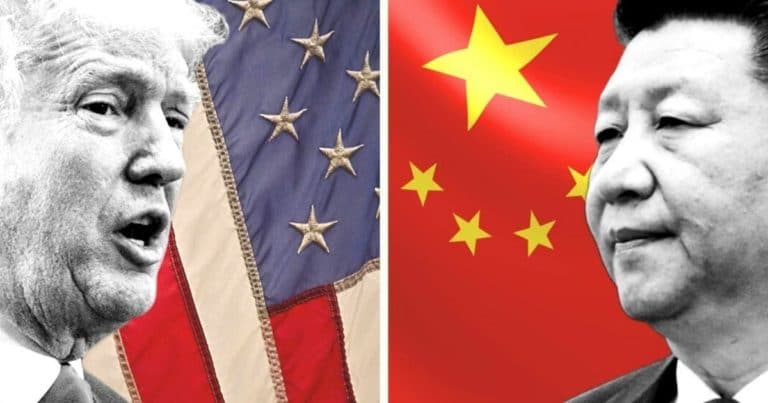
This week in Washington, that shift from theory to practice may be happening in real time. President Trump is hosting Chinese President Xi Jinping for a summit that could reshape global energy markets for decades. And the consequences stretch well beyond commodity prices – though those matter plenty.
From Just the News:
When President Donald Trump meets Xi Jinping in Washington this week, the headline number to watch is not another vague pledge to “buy more American goods.” It is a potential government-level deal to reopen U.S. liquefied natural gas (LNG) sales to China – on top of a commercial contract already signed last week – and the strategic meaning of that move in the conflict with Iran.
U.S. and Chinese officials have reportedly discussed reducing or eliminating Beijing’s 15% tariff on American LNG as part of a broader energy and agriculture package that could be announced around Thursday’s summit.
The specifics here are anything but vague. Bloomberg estimates that existing Chinese contracts for U.S. natural gas already total roughly 14 million tons per year – worth approximately $6 billion at long-term prices. That trade froze after Beijing slapped tariffs on American LNG in early 2025. Direct shipments collapsed from 64 vessels in 2024 to zero last year. Not a slow decline. A cliff.
Now the thaw is underway. Last week, China Gas Holdings signed a 20-year deal with Louisiana-based Venture Global for 500,000 tons annually, pushing that single buyer’s commitments to 2.5 million tons per year. Reuters reports both sides are discussing roughly $30 billion in reciprocal tariff cuts – a framework that could blow the doors open for American energy and agriculture exports simultaneously.
Funny how none of this happens when your energy policy revolves around killing pipelines and begging OPEC for mercy. A president who treats fossil fuels as a strategic asset – not a carbon sin to apologize for – produces different results.
Choking off Tehran’s last lifeline
The commercial upside alone would be worth celebrating. But the geopolitical dimension is where this gets genuinely historic.
China previously imported about one-third of its LNG from the Middle East, with Qatar alone supplying roughly 28 percent. After U.S. and Israeli strikes on Iran in late February, the Strait of Hormuz effectively closed. Iranian missiles then destroyed 17 percent of Qatar’s LNG export capacity. Roughly 15 percent of China’s natural gas imports disappeared overnight. That is not a disruption. That is a crater.
Iran cannot fill the gap either. Decades of American sanctions blocked the financing, shipping, and liquefaction technology Tehran needs to become a serious LNG exporter. Even its crude oil lifeline is fraying badly. Kpler data show China has purchased more than 80 percent of Iran’s seaborne crude, but a U.S. naval blockade slashed that intake from about 1.4 million barrels per day to around half a million this summer.
The message to Tehran requires no diplomatic translation: your most important customer now has a substitute, and it ships from American ports.
Beijing’s bargain from a position of weakness
Here’s the part that should make every conservative smile. China is not exactly negotiating with a strong hand.
The Washington Post reported this week that China’s economy may be headed for its worst non-COVID year since the early 1990s. Second-quarter GDP dragged in at 4.3 percent – below Beijing’s own target – weighed down by a property bust, anemic consumption, and debt north of 300 percent of GDP. That last number deserves a moment of quiet reflection from anyone who worries about our national debt.
Meanwhile, China is on track to meet its commitment to purchase 25 million metric tons of U.S. soybeans annually, with an additional $17 billion in agricultural purchases under discussion. American energy workers and American farmers winning at the same negotiating table. Not bad for a week’s work.
The bigger picture
Zoom out and the full strategy reveals itself. Trump applied pressure through tariffs and sanctions. He destabilized the Gulf supply chain that Iran had weaponized for decades. Now he is offering Beijing a commercially rational exit: durable, multi-decade American natural gas in exchange for commitments that benefit workers from Louisiana wellheads to Iowa soybean fields.
Previous administrations would have restricted LNG exports, softened the pressure on Iran, and crossed their fingers that Beijing might play nice. This administration chose a different road. Produce more. Sell more. Strip the regime in Tehran of its last economic card. That is not just energy policy. That is American strength – with a generational payoff attached.
Key Takeaways
- Trump’s China LNG deal could unlock $6 billion in annual American natural gas sales.
- Iran loses its biggest customer as U.S. energy replaces unstable Gulf supplies.
- China negotiates from its weakest economic position in over three decades.
- American energy workers and farmers both benefit from a single strategic play.
Sources: Just The News, Reuters