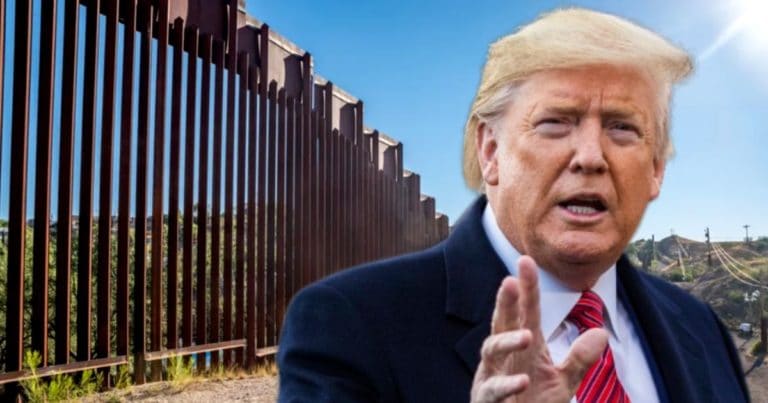
For decades, the Rio Grande has been less of a border and more of a suggestion—a ribbon of water that cartels and coyotes treated like a toll-free highway into America. Remember when we were told walls don’t work and barriers are “inhumane”? Under the Biden administration, even modest attempts to secure this stretch were met with lawsuits and lectures about humanitarian concerns. Meanwhile, Border Patrol agents watched helplessly as thousands crossed daily, many drowning in the treacherous currents the government refused to block.
Texas decided it wasn’t going to wait for Washington to figure it out. Governor Greg Abbott launched Operation Lone Star and deployed floating barriers near Eagle Pass in 2023. The Biden Justice Department promptly sued, demanding Texas remove the buoys. Abbott’s response? “See you in court.” I have to admit, that one made me smile. The Fifth Circuit Court of Appeals ultimately sided with Texas, ruling the barriers could stay and even expand.
That was then. This is now. The reversal is almost poetic.
The Department of Homeland Security just announced it’s deploying more than 500 miles of floating buoy barriers along the Rio Grande—the largest water-based border security system in American history. The man overseeing the federal rollout? Michael Banks, who served as Governor Abbott’s Border Czar before becoming U.S. Border Patrol Chief. You genuinely cannot make this stuff up.
From Governor Abbott’s press secretary Andrew Mahaleris to the Texas Tribune:
“Texas finally has a partner in the White House. The floating marine barriers deployed by Texas have been a resounding success, and Governor Abbott is proud to work with the Trump Administration and Border Patrol to expand the program.”
The irony is almost too perfect. The very strategy Biden’s DOJ tried to kill in court is now federal policy, funded by $45 billion in Congressional border security appropriations. So much for “walls don’t work.”
How it works
These aren’t the same buoys Texas originally deployed. The federal version features a redesigned cylindrical shape with improved flotation and a ratchet system that rolls backward when anyone attempts to climb on. At 200 to 500 pounds each, they’re formidable enough that—as one commenter bluntly put it—”no sane person would go near these buoys.”
DHS Secretary Kristi Noem noted the barriers “create a safer environment for agents on patrol” while saving lives “by deterring illegal aliens from daring to attempt to cross through this treacherous water.” Funny how actual deterrence turns out to be the humane option. The system integrates with the administration’s broader Smart Wall technology initiative, creating layers of security that actually work together.
Better still, the buoys are manufactured by Gibraltar Perimeter Security—a family-owned Texas company. American problems, American solutions, American jobs.
Making America safe again
I’ll be honest: there’s something deeply satisfying about watching this unfold. For years, we were told border barriers were cruel, ineffective, or somehow illegal. Texas proved otherwise, absorbed the political attacks, won in court, and kept building anyway.
Now the federal government isn’t just permitting Texas to continue—it’s scaling the program two hundred-fold. That’s what happens when you elect leaders who actually want to secure the border instead of managing its collapse.
The Rio Grande is about to become far less inviting for cartel operatives and human traffickers. And for Americans who’ve spent years watching their sovereignty treated as optional? This 500-mile answer is long overdue.
Key Takeaways
- DHS is deploying 500+ miles of floating barriers—the largest water-based border security system in U.S. history
- The federal program adopts Texas’s strategy that Biden’s DOJ unsuccessfully sued to stop
- Former Texas Border Czar Michael Banks now leads the federal rollout as Border Patrol Chief
- American-made buoys from a Texas company will integrate with Trump’s broader Smart Wall initiative