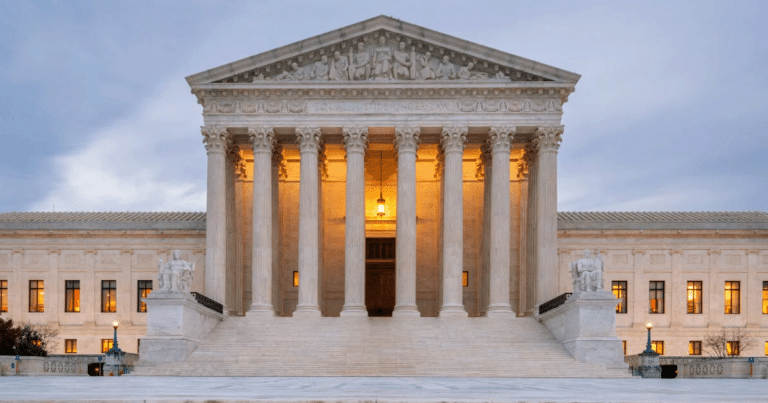
For generations, American parents and grandparents have taken comfort in knowing their daughters could compete fairly in sports, change safely in locker rooms, and enjoy the dignity of female-only spaces. (Remember when that was just common sense?) But in recent years, this fundamental understanding has been under relentless assault by activists waging a war on reality itself. Now, as winter gives way to spring, nine justices will decide whether common sense and fairness will prevail—or whether ideology will triumph over the safety and rights of women and girls across America.
The stakes couldn’t be higher. What started as isolated incidents in liberal strongholds has metastasized into a nationwide crisis. Boys who couldn’t cut it in male sports are suddenly dominating girls’ competitions. Call it what it is—athletic theft. Parents who once cheered from the sidelines now watch helplessly as their daughters lose scholarships, championships, and even their privacy to competitors who were born male. The absurdity would be laughable if it weren’t destroying real opportunities for real girls.
From ‘Just the News’:
In seven weeks, the U.S. Supreme Court will hear oral arguments in two cases involving challenges to the constitutionality of laws in Idaho and West Virginia that prohibit transgender women and girls from participating on women’s and girls’ sports teams. A decision in these cases could have far-reaching implications nationwide…
“The broad ruling, what that would do, is clarify what the definition of sex means. That it’s biologically male and female and that it’s immutable, and that specifically it does not mean gender identity,” Parlato explained. “So, we are hopeful that the court is going to give us a broad ruling to clarify the meaning of sex.”
A Defining Moment for Women’s Rights
On January 13, 2026—just six weeks from now—the U.S. Supreme Court will hear oral arguments in two pivotal cases from Idaho and West Virginia. These states had the audacity to protect female athletes from rigged competitions. The cases—Little v. Hecox and West Virginia v. B.P.J.—challenge state laws that reserve girls’ sports for actual girls. (Yes, we’ve actually reached the point where this needs Supreme Court intervention.)
Beth Parlato, senior legal advisor at the Independent Women’s Law Center, understands the monumental opportunity before the court. A broad ruling wouldn’t just validate Idaho and West Virginia’s protective measures. It would establish nationwide clarity on what “sex” means under federal law. We’re talking about the 14th Amendment’s Equal Protection Clause and Title IX—you know, that landmark law originally designed to create opportunities for women, not hand them to men in skirts.
Currently, 24 states lack legislation protecting female sports. That’s millions of young women vulnerable to sanctioned cheating. In Washington state, for instance, current policy allows students to participate based on their “gender identity” rather than biological sex. Translation: feelings trump fairness, and your daughter’s safety comes second to some boy’s self-expression.
Beyond the Playing Field
Here’s where it gets really interesting. The implications extend far beyond who wins the 100-meter dash. As Parlato notes, this case could reshape protections for women in “locker rooms and showers and all-girl sororities and all-female prisons and the other areas where females deserve private spaces.” The Supreme Court’s decision will determine whether males can continue forcing their way into these spaces simply by uttering magic words about their “identity.”
President Trump’s executive order “Keeping Men out of Women’s Sports” signals what most Americans already know—this madness has gone too far. Groups like Let’s Go Washington are fighting back at the state level. They’re pushing initiatives requiring physical examinations before sports participation. Basic stuff that was standard practice before the gender ideology machine hijacked our schools.
The radical activists have successfully bullied institutions from elementary schools to elite universities. But they may have finally overplayed their hand. A Supreme Court willing to state the obvious—that males are males and females are females—could end this charade overnight. A broad ruling would mean, in Parlato’s words, that “all the girls in the United States will be protected, including those in your state of Washington.”
Key Takeaways
- Supreme Court will hear transgender sports cases January 13, potentially protecting women nationwide
- A broad ruling could safeguard female-only spaces beyond athletics
- Twenty-four states currently lack laws protecting girls’ sports from male competitors
- This decision represents a generational opportunity to affirm biological reality
Sources: Just The News