There’s a particular kind of audacity that only Hollywood can manufacture. A celebrity cashes an enormous check. Surrenders ownership of their creative work. Then — when that work surfaces in a way that offends their political sensibilities — races to social media to deliver a sermon. It’s theater, not principle.
This routine has grown almost tiresome in the Trump era. One wealthy entertainer after another, each one genuinely stunned that a Republican administration would dare pair their art with American military power. The latest eruption landed this weekend. And honestly, it might be the most self-defeating one yet.
From Fox News:
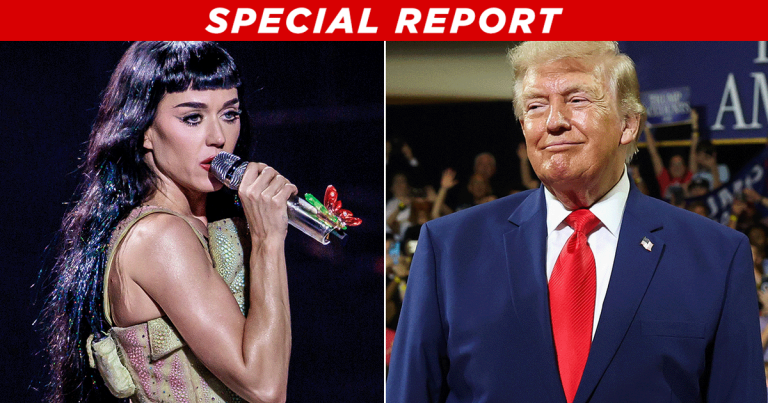
Katy Perry blasted the White House for using her hit 2010 song “Firework” in a TikTok video without her permission, years after the pop star sold the majority of her music catalog in a reported $225 million deal.
On Thursday, the White House TikTok account shared a video featuring black and white footage of recent military strikes on Iranian targets, timed to the “boom, boom, boom” lyric from “Firework.”
Perry didn’t waste a single minute climbing onto her soapbox. “I am deeply appalled and angry,” she wrote on X, insisting she “did not approve this” and “absolutely” does not “condone it.” She described the video as “a complete violation of everything my song stands for,” adding that her “music is for bringing people together, not celebrating warfare.”
Noble sentiments. There’s just one enormous problem with the whole performance.
A quarter-billion reasons she can’t complain
In September 2023, Katy Perry sold her music catalog rights — spanning her first five studio albums — to Litmus Music, a subsidiary of The Carlyle Group. The reported price tag? A cool $225 million. That deal included master recording royalties and music publishing rights for “Teenage Dream,” the very album containing “Firework.”
Read that number again. She accepted a quarter of a billion dollars to hand over control of her music, and now she’s “appalled” that nobody consulted her before using it. That’s not how property rights work in this country. You don’t sell your car for top dollar and then dictate where the new owner drives it.
Here’s the detail that really seals it: neither Litmus Music nor The Carlyle Group — the people who actually own the song — have uttered a word of complaint. Their silence tells you everything about Perry’s legal standing. She has none. Her objection is a tweet, not a legal claim.
The Marine cosplay problem
The financial contradiction alone would be enough. But White House Deputy Communications Director Kaelan Dorr went ahead and made it worse — for Perry, anyway.
“This you?” Dorr posted on X, attaching a montage from Perry’s own 2012 music video for “Part of Me.” The clip features the pop star enlisting in the U.S. Marines, strapping on combat gear, and charging through military training exercises alongside service members. She looked pretty comfortable with martial imagery when it was moving units and stacking royalties.
So militaristic aesthetics are perfectly acceptable when they fuel album sales, but suddenly grotesque when a Republican president deploys them to communicate American resolve? There’s a word for that kind of selective outrage. It isn’t principle. It’s partisanship — dressed up in a press-ready font.
Falling for it every time
Perry didn’t invent this cycle. She just joined the assembly line. Ariana Grande erupted after her song appeared in an ICE enforcement video. Kesha condemned the White House for pairing her hit “Blow” with missile footage. Bruce Springsteen and Céline Dion have added their voices to the chorus. Every single time, the script runs identically: celebrity expresses horror, media amplifies the tantrum, and the original White House video racks up millions of additional views.
The administration isn’t stumbling into these confrontations. They’re engineering them. Communications Director Steven Cheung admitted it plainly: “All these ‘singers’ keep falling for this. This just gives us more attention and more view counts to our videos because people want to see what they’re b—-ing about.”
Dorr was equally direct after the Kesha skirmish: “Kesha quotes are like Popeye’s spinach to this team. Memes? They’ll continue. Winning? Will also continue.”
These celebrities are walking straight into a trap. Repeatedly. With enthusiasm.
The real story
While Katy Perry tends to her bruised sensibilities over a TikTok soundtrack, the actual substance of that video — American military strikes demonstrating resolve against an Iranian regime threatening our allies and our security — barely registers with the outrage crowd. That asymmetry is the real story.
The administration is projecting strength abroad. Hollywood is projecting feelings on social media. Perry had every right to keep her music and her moral authority intact. She chose $225 million instead. That kind of money buys plenty of things. Self-awareness, apparently, isn’t one of them.
Key Takeaways
- Perry sold her music catalog for $225 million and no longer controls how her songs are used.
- Her own “Part of Me” music video glorified military service when it boosted record sales.
- The White House openly admits celebrity backlash drives millions of additional views to their content.
- The real story is American strength against Iran, not a pop star’s wounded ego.
Sources: Fox News, The Washington Post